【Book Publication】Research Results Published in International Academic Book Edited by Professor Emeritus Soya of University of Tsukuba
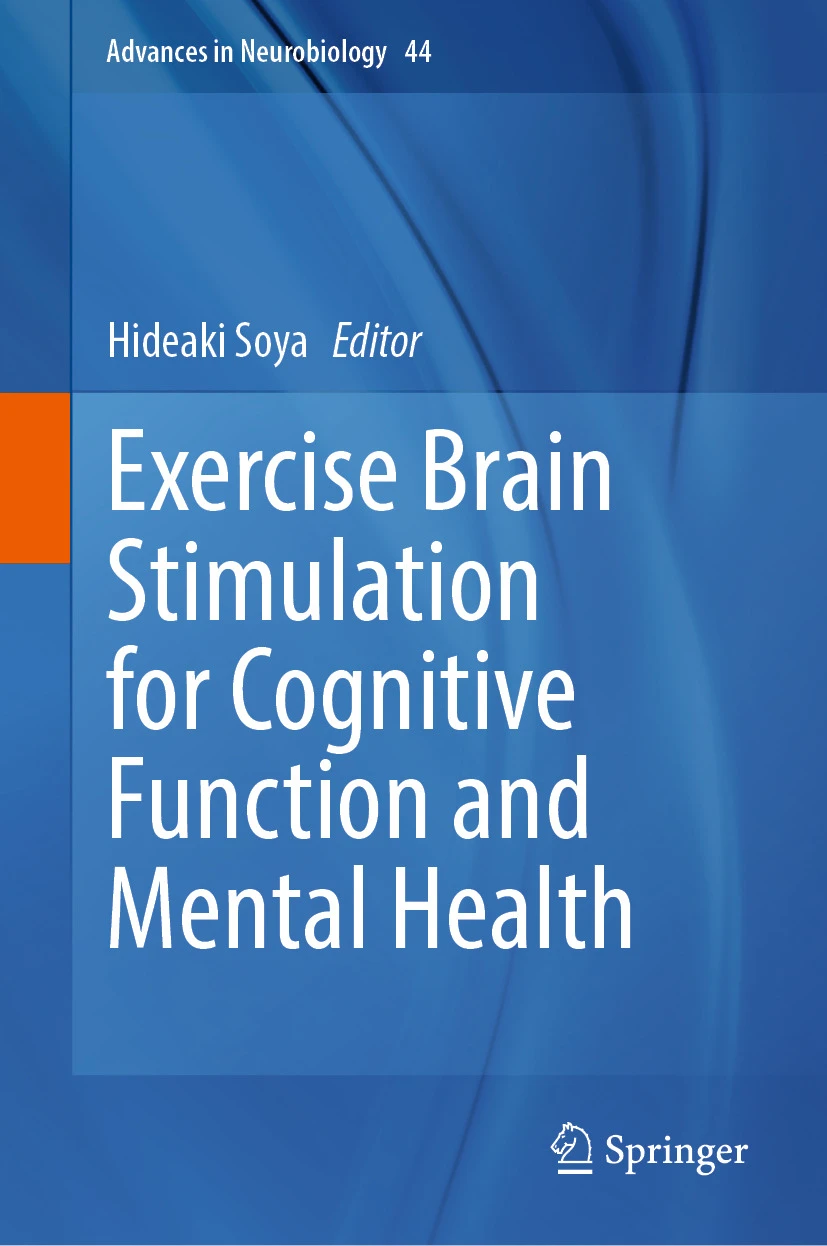
Book Publication Announcement
This September 2025, the international academic book 'Exercise Brain Stimulation for Cognitive Function and Mental Health' was published by Springer Nature. Lecturer Ochi was responsible for writing the chapter "Application of Minimum Exercise Model to the Hypoxic Environment" in this book.
Book Information
- Title: Exercise Brain Stimulation for Cognitive Function and Mental Health
- Editor: Professor Emeritus Hideaki Soya (University of Tsukuba)
- Publisher: Springer Singapore
- ISBN: 978-981-95-0066-6
- Publication Date: September 2025
- Series: Advances in Neurobiology (Volume 44)
- URL: https://link.springer.com/book/10.1007/978-981-95-0066-6
About the Book
This book is an academic work that comprehensively summarizes the latest scientific findings on the beneficial effects aerobic exercise has on brain health. Focusing on the prefrontal cortex and hippocampus, which play important roles in cognitive and memory functions, it includes a wide range of research results from animal experiments to human studies.
It systematically explains from basic to applied research how exercise influences brain structure, function, and neurochemical pathways, and discusses in detail the potential of exercise therapy for neuropsychiatric disorders such as Alzheimer's disease and depression.
About the Chapter
In the chapter "Application of Minimum Exercise Model to the Hypoxic Environment" written by Ochi, effective exercise protocols in hypoxic environments are explained based on the latest research findings.
Significance of the Book
We hope this will serve as a valuable reference for researchers, clinicians, educators, and students in exercise science, neuroscience, physiology, and psychiatry. By reconsidering exercise not merely as a means of health maintenance but as a dynamic regulator of brain function, it explores the potential of physical activity as a non-pharmacological tool supporting cognitive function and mental health.