【Research】The "Love Hormone" as a Sign of Mental Fatigue? Surprising Discovery from Hair Analysis
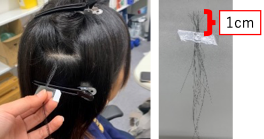
Revealing the "Hidden Stress" of Female Soccer Players Through Hair Analysis
A research team led by Lecturer Genta Ochi, along with Kazuka Ohara (Class of 2024) and Hana Kameo (Class of 2024) from the Department of Health and Sports at Niigata University of Health and Welfare, analyzed hormones (cortisol and oxytocin) contained in the hair of female soccer players and revealed that these hormones are associated with players' mental states.
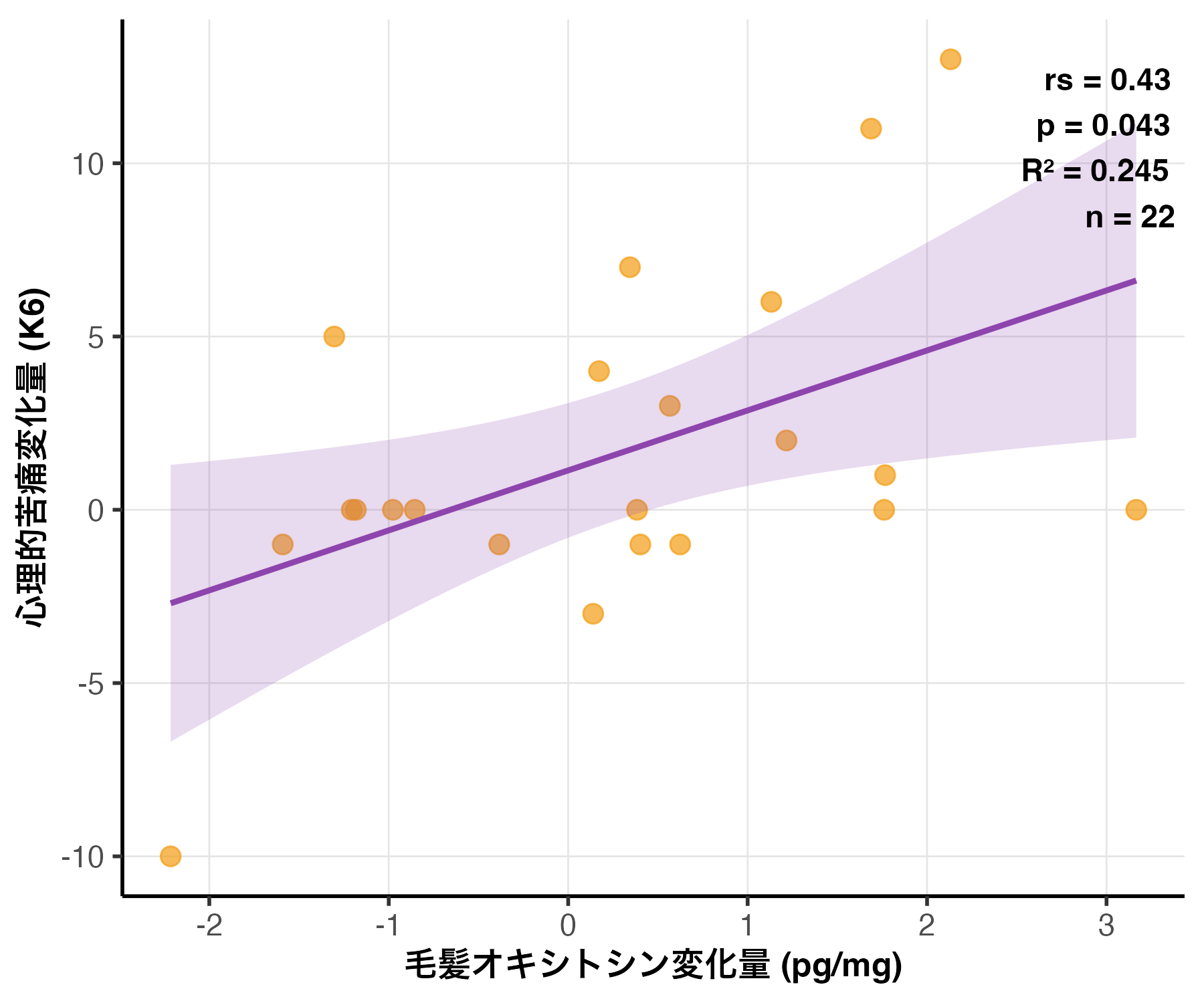
Notably, the study found that players with increased levels of oxytocin—known as the "love hormone"—experienced greater psychological distress, including anxiety and depression. This suggests that oxytocin may be secreted as a coping mechanism against chronic stress.
These findings could potentially serve as new indicators for early detection of athlete "burnout syndrome" and "overtraining."
Key Findings
- Hair reveals stress levels: Without painful blood draws, a small hair sample can objectively assess stress levels over the past month.
- Increased oxytocin associated with psychological distress: Players with elevated hair oxytocin levels experienced greater psychological distress. While oxytocin is known as the "love hormone," under chronic stress conditions it may be secreted as a "signal of attempting to cope with stress."
- Two hormones vary independently: Cortisol and oxytocin were found to change independently of each other, driven by different factors. Additionally, a statistically significant association was found between changes in hair cortisol and changes in vigor.
- Insights specific to female athletes: This study focused on female soccer players, providing important knowledge for conditioning management in female athletes.
Results
The study examined 22 members of the Niigata University of Health and Welfare women's soccer team (average age 19.8 years, approximately 14 years of soccer experience).
From February (post-off-season) to March (start of intensive training), training load increased approximately 2.5-fold. Correspondingly, players' perceived fatigue significantly increased.
Interestingly, despite the substantial increase in training load, average hair cortisol and oxytocin levels showed no major changes. However, analysis focusing on individual differences revealed important relationships.
Notably, players with increased hair oxytocin showed increased psychological distress (anxiety and depression) (rs = 0.43, p = 0.043). Additionally, a statistically significant association was found between changes in hair cortisol and changes in vigor (rs = -0.44, p = 0.039).
Hair cortisol and hair oxytocin showed no correlation, indicating that each reflects different psychological states. This suggests that measuring both hormones is important for accurately assessing athlete stress status.
Future Prospects
This research has potential applications including:
- Early detection of overtraining: Regular hair hormone measurement may detect stress accumulation before athletes become aware of it.
- Individualized training management: Tracking each athlete's hormone changes could inform optimal training volume and rest timing.
- Mental health care contribution: Physiological indicators can complement "hidden stress" that psychological surveys alone might miss.
Terminology
Hair Cortisol Concentration (HCC): Cortisol, secreted by the adrenal glands, is also called the "stress hormone." Blood cortisol is incorporated into hair during growth, allowing long-term stress assessment through hair analysis.
Hair Oxytocin Concentration (HOC): Oxytocin, also called the "love hormone" or "bonding hormone," is involved in social connections and trust relationships. While it is thought to mitigate stress responses, under chronic stress its secretion may increase as an attempt to cope with stress.
Research Information
Paper Title: Changes in Hair Cortisol and Oxytocin Independently Associate with Positive and Negative Psychological States in Female Soccer Players
Authors: Kazuka Ohara¹, Hana Kameo¹, Genta Ochi¹* (*: Corresponding author)
Affiliation: 1. Department of Health and Sports Science, Faculty of Health Sciences, Niigata University of Health and Welfare
Journal: Frontiers in Sports and Active Living
Publication Date: January 12, 2026
DOI: https://doi.org/10.3389/fspor.2025.1742869
Research Funding
This research was supported by JSPS KAKENHI (JP22K17739; JP25K21657), JKA Research Grant 2024, and Niigata University of Health and Welfare Research Encouragement Grant 2024.